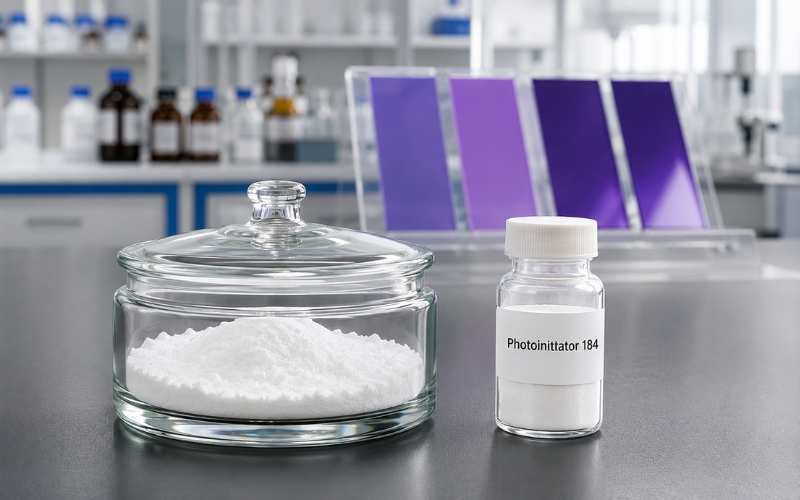
Photoinitiator 184 is 1-Hydroxycyclohexyl phenyl ketone, CAS 947-19-3. It is a solid Type I alpha-hydroxy ketone photoinitiator used to start free-radical UV curing in acrylate coatings, inks, adhesives, varnishes, and selected UV resin systems.
Best for:
- Clear UV coatings
- Overprint varnishes
- Wood coatings
- Plastic coatings
- Clear UV adhesives
- Low-yellowing acrylate systems
- Mercury UV curing lines
- Some 365 nm UV systems after testing
Not ideal alone for:
- White UV ink
- Thick pigmented coatings
- Highly filled UV adhesives
- 395 nm / 405 nm LED-only curing
- Deep-cure 3D printing resins
- Systems with poor solid photoinitiator solubility
Typical starting dosage:
| Application | Practical Starting Range |
|---|---|
| Clear UV coating | 1–3% |
| UV varnish | 2–4% |
| UV ink | 2–5% |
| UV adhesive | 1–4% |
| 3D printing resin | formulation-specific |
Buyer rule: choose Photoinitiator 184 when low yellowing and surface cure matter. For deep cure, white ink, thick films, or longer-wavelength UV LED, test it with TPO, TPO-L, or 819.
Why Photoinitiator 184 Still Matters in UV Curing
A TDS can tell you the CAS number. It cannot tell you whether Photoinitiator 184 will cure your coating at full line speed, stay clear after aging, or dissolve cleanly in your monomer package.
That is where many UV formulation problems begin.
I often see buyers treat PI 184 as a simple replacement item. They ask for price, purity, and lead time. But when we discuss the real application, the risk appears fast: thick film, high pigment loading, 405 nm LED, poor dissolution, or a yellowing limit the factory has not measured.
Photoinitiator 184 is not difficult to understand. It is difficult to apply blindly.
This guide explains Photoinitiator 184 from the point of view that matters to UV coating, ink, adhesive, and resin manufacturers: how to select it, how to test it, when to blend it, and how to buy it without batch risk.
What is Photoinitiator 184?
Photoinitiator 184 is a solid Type I free-radical photoinitiator used in UV-curable acrylate systems. Its chemical name is 1-Hydroxycyclohexyl phenyl ketone, and its CAS number is 947-19-3. Under suitable UV light, it forms radicals that start polymerization and turn liquid UV resin into a cured solid film.
You may also see it called:
- PI 184
- Irgacure 184
- Omnirad 184
- 1-Hydroxycyclohexyl phenyl ketone
- CAS 947-19-3
The 1-Hydroxycyclohexyl phenyl ketone PubChem record confirms its chemical identity and molecular formula. IGM also describes Omnirad 184 as a highly efficient non-yellowing photoinitiator for acrylate systems.
For UVIXE buyers, the most common use cases are UV coatings, UV inks, UV adhesives, varnishes, wood coatings, plastic coatings, and selected UV resin systems.
If you need production material, review UVIXE’s Photoinitiator 184 supplier page for product supply, documents, and sample support.
Photoinitiator 184 Technical Identity
| Parameter | Typical Information for Photoinitiator 184 |
|---|---|
| Product Name | Photoinitiator 184 |
| Common Names | PI 184, Irgacure 184, Omnirad 184 |
| Chemical Name | 1-Hydroxycyclohexyl phenyl ketone |
| CAS Number | 947-19-3 |
| Molecular Formula | C13H16O2 |
| Molecular Weight | 204.27 g/mol |
| Photoinitiator Type | Type I alpha-hydroxy ketone |
| Appearance | White crystalline powder |
| Main Cure Chemistry | Free-radical UV curing |
| Main Resin Fit | Acrylate monomers and oligomers |
| Key Benefit | Low yellowing and good surface cure |
A typical Photoinitiator 184 technical datasheet lists it as a white crystalline powder with high assay and a melting range near 46–49°C.
These numbers matter in purchasing. If a supplier gives unstable melting range, poor appearance, or no batch COA, your factory is not buying a controlled raw material. It is taking a production risk.
How Does Photoinitiator 184 Work?
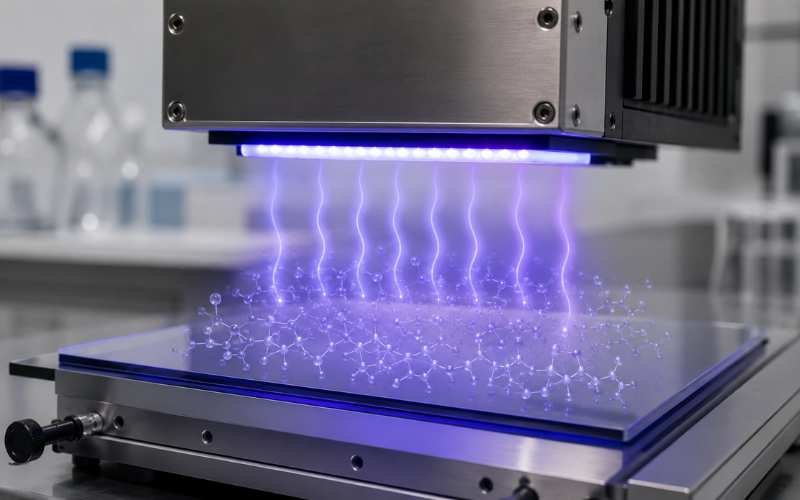
Photoinitiator 184 absorbs UV light and breaks into active radicals. These radicals react with acrylate double bonds and start chain polymerization.
The curing path is simple:
| Step | What Happens |
|---|---|
| UV exposure | The lamp sends UV energy into the wet film |
| Absorption | Photoinitiator 184 absorbs suitable UV light |
| Cleavage | PI 184 splits into active radicals |
| Polymerization | Radicals react with acrylate groups |
| Curing | The liquid film becomes a solid coating, ink, adhesive, or resin layer |
Bomar gives a useful explanation of how photoinitiators form radicals in UV formulations. In production, though, the mechanism is only the start.
The final cure depends on:
- Lamp wavelength
- UV energy dose
- Film thickness
- Pigment loading
- Resin reactivity
- Oxygen inhibition
- PI 184 dosage
- Solubility and mixing process
When a buyer tells me, “Our formula does not cure,” I do not only ask the dosage. I ask where it fails: surface, bottom, adhesion, hardness, odor, or yellowing. Each failure points to a different fix.
Should You Choose Photoinitiator 184 for Your UV Formulation?
This is the decision section many supplier pages miss.
| Buyer Situation | Should You Choose 184? | Better Decision |
|---|---|---|
| Clear UV coating | Yes | Start with 1–3% PI 184 |
| Overprint varnish | Yes | Test 184 or 184 + 1173 |
| Wood coating | Yes | Check yellowing after aging |
| Clear UV adhesive | Often yes | Test bond depth and residual tack |
| Light-color UV ink | Maybe | Test 184 + TPO blend |
| White UV ink | Not alone | Use TPO-L or 819 support |
| Thick pigmented coating | Not alone | Add deeper-curing initiator |
| 365 nm UV LED | Possible | Lab validation needed |
| 395/405 nm UV LED | Usually weak alone | Test TPO, TPO-L, or 819 |
| SLA/DLP 3D printing resin | Case by case | Match wavelength and cure depth |
My rule is direct: I recommend PI 184 when the buyer needs low-yellowing surface cure. I do not recommend it alone when the buyer needs deep cure through pigment, filler, or thick film.
For buyers comparing similar products, UVIXE’s Photoinitiator 1173 vs 184 guide is a useful next step.
What is Photoinitiator 184 Used For in UV Coatings, Inks and Adhesives?
Photoinitiator 184 for UV Coatings
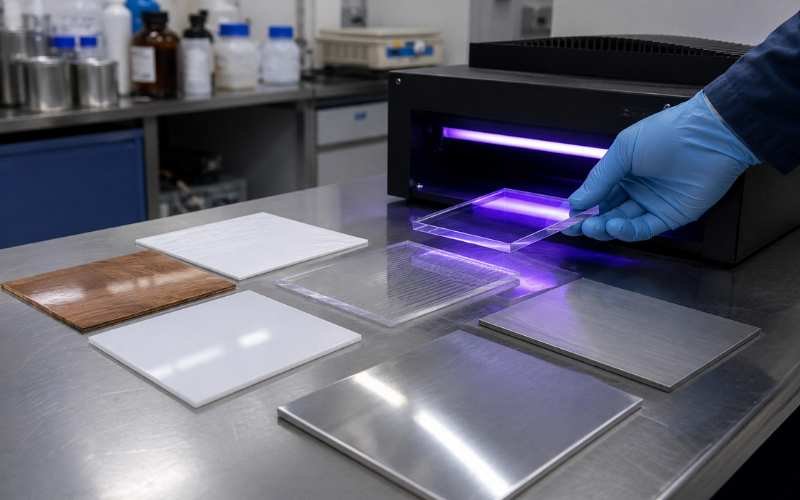
Photoinitiator 184 is a strong fit for clear and lightly pigmented UV coatings. It is often selected when the buyer wants low yellowing, good surface cure, and clean appearance.
Common coating applications include:
- UV wood coatings
- UV plastic coatings
- Paper varnishes
- Metal topcoats
- Clear protective coatings
- Overprint varnishes
The Tecmos Photoinitiator 184 TDS mentions acrylic varnish coatings on paper, wood, metal, and plastic surfaces. That matches the most common industrial use cases I see.
For thick or pigmented coatings, I usually ask buyers to test PI 184 with TPO photoinitiator or Photoinitiator 819 / BAPO.
Photoinitiator 184 for UV Inks
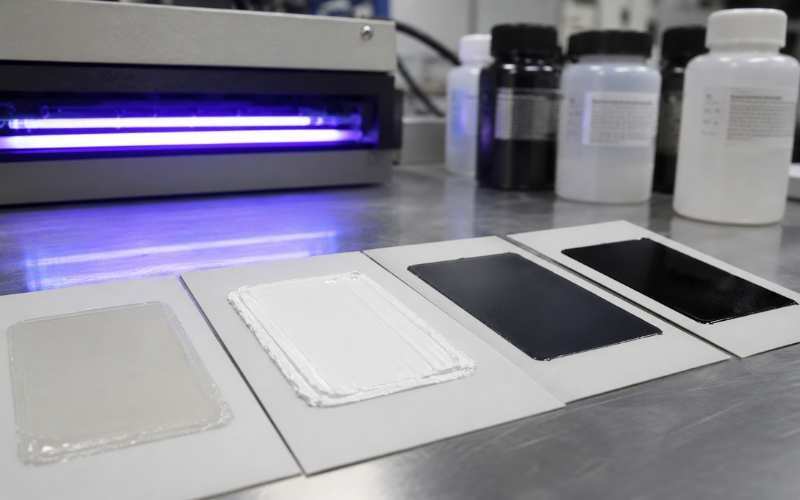
Photoinitiator 184 can support surface cure in UV inks, especially clear varnish inks and lightly pigmented systems.
It becomes weaker when the ink contains heavy pigment. White UV ink is the classic example. Titanium dioxide blocks and scatters UV light, so the surface may cure while the bottom stays soft.
| UV Ink Type | PI 184 Fit | Practical Blend Logic |
|---|---|---|
| Clear varnish ink | Strong | 184 or 184 + 1173 |
| Light-color ink | Good starting point | 184 + TPO |
| White UV ink | Weak alone | 184 + TPO-L or 819 |
| Black UV ink | Limited alone | Consider ITX, DETX, 369, or 819 |
| Thick ink film | Needs testing | Add deeper-cure support |
Comindex lists UV photoinitiator use in varnishes, primers, wood lacquers, adhesives, screen inks, and offset inks in its photoinitiator guide.
Photoinitiator 184 for UV Adhesives
Photoinitiator 184 can work in clear UV adhesives where the bond line is thin enough for UV penetration. It is useful when the buyer wants clarity and low yellowing.
During adhesive testing, check:
- Tack-free time
- Bond strength
- Cure depth
- Residual odor
- Adhesion to plastic, glass, or metal
- Yellowing after heat or UV aging
If the adhesive layer is thick, filled, or shadowed, PI 184 alone may leave uncured material inside. In that case, a deeper-curing initiator or dual-cure system may be safer.
Photoinitiator 184 for 3D Printing Resin
Photoinitiator 184 can be used in selected UV resin systems, but it is not the first answer for every SLA or DLP resin.
Modern 3D printing often uses 385 nm, 395 nm, or 405 nm LEDs. PI 184 needs the right wavelength overlap. For many 405 nm systems, TPO, TPO-L, or 819 may give better cure depth.
For 3D printing resin manufacturers, test:
- Cure depth per exposure
- Green strength
- Yellowing after post-cure
- Detail resolution
- Viscosity impact
- Shelf stability
- Odor and residual monomer
For a wider explanation of initiation chemistry, read UVIXE’s guide on what does a photoinitiator do.
How Much Photoinitiator 184 Should You Use?
Photoinitiator 184 dosage depends on resin, monomer, lamp energy, film thickness, pigment, oxygen exposure, and target line speed.
Use these ranges only as lab starting points.
| Application | Starting Dosage | Film Thickness Logic | Main Risk | Blend Advice |
|---|---|---|---|---|
| Clear UV coating | 1–3% | Thin to medium clear film | Yellowing if overdosed | 184 or 184 + 1173 |
| UV varnish | 2–4% | Fast line speed may need more PI | Surface tack | 184 + 1173 |
| Light UV ink | 2–5% | Pigment reduces UV penetration | Weak bottom cure | 184 + TPO |
| White UV ink | 3–6% total PI blend | TiO2 blocks UV strongly | Bottom remains soft | TPO-L / 819 support |
| UV adhesive | 1–4% | Bond depth controls success | Residual tack | Test 184 + deeper PI |
| UV resin | formulation-specific | Wavelength and depth decide | Poor green strength | Test TPO / 819 |
I rarely approve a formula from one dosage test. A better method is a three-point ladder.
Example:
| Test | PI 184 Level | What to Measure |
|---|---|---|
| A | 1.5% | Basic cure response |
| B | 2.5% | Surface hardness and tack |
| C | 3.5% | Yellowing, odor, cure speed, cost |
Too little PI 184 can cause slow cure, soft surface, blocking, weak adhesion, and high residual monomer.
Too much PI 184 can increase yellowing, odor, brittleness, migration concern, and formula cost.
The best dosage is not the highest dosage. It is the lowest stable dosage that gives full cure at your real production speed.
Is Photoinitiator 184 Suitable for UV LED Curing?
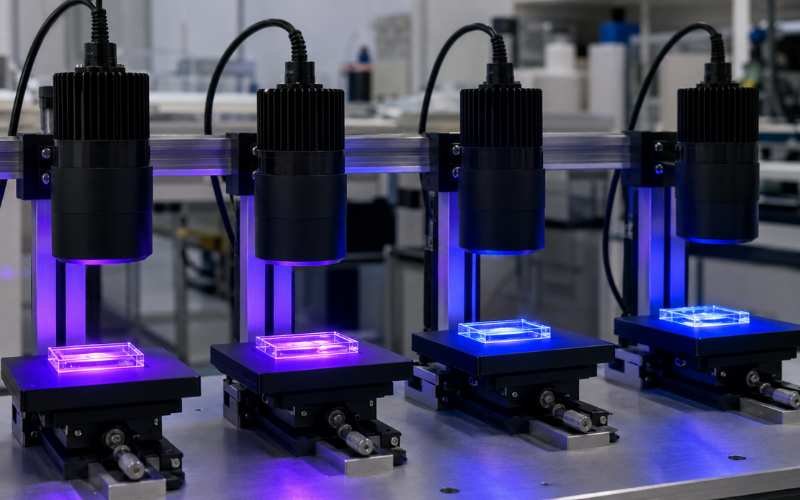
Photoinitiator 184 can work in some UV LED systems, but it is not a universal LED photoinitiator.
Many buyers say “UV LED” as if it means one thing. It does not. A 365 nm LED and a 405 nm LED are very different curing tools.
| Light Source | PI 184 Suitability | Buyer Action |
|---|---|---|
| Mercury UV lamp | Good fit in many systems | Strong traditional use case |
| 365 nm UV LED | Possible | Test cure speed and depth |
| 385 nm UV LED | Formulation-dependent | Compare with TPO blend |
| 395 nm UV LED | Often weak alone | Test TPO, TPO-L, or 819 |
| 405 nm UV LED | Usually not first choice alone | Use longer-wavelength PI support |
Songwon’s UV curing photoinitiator guide explains that 184 and 1173 fit unpigmented clear coating systems, while TPO is suitable for highly pigmented systems and low-yellowing applications.
That is why I do not recommend PI 184 alone for most 405 nm DLP resin or thick pigmented LED systems. It may support the blend, but it should not carry the full cure job alone.
Photoinitiator 184 vs 1173 vs TPO vs 819: Which One Should Buyers Choose?
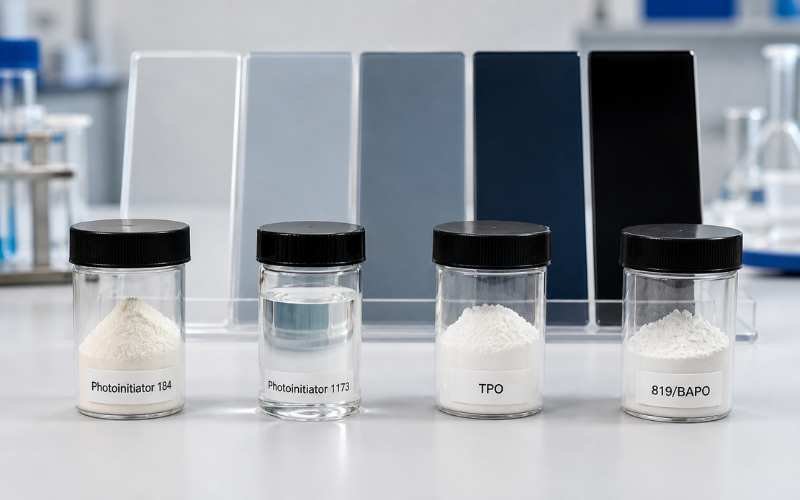
| Decision Factor | Photoinitiator 184 | Photoinitiator 1173 | TPO | 819 / BAPO |
|---|---|---|---|---|
| Physical Form | Solid | Liquid | Solid | Solid |
| Main Strength | Low yellowing, surface cure | Easy mixing, fast clear cure | Pigmented and LED systems | Deep cure and thick films |
| Best Use | Clear coatings, varnish, adhesives | Clear coatings and varnishes | White ink, coatings, UV resin | Thick, filled, pigmented systems |
| Handling | Needs dissolution | Easy to blend | Needs dissolution | Needs dissolution |
| LED Fit | Limited at longer wavelength | Limited at longer wavelength | Better | Better |
| Main Risk | Poor through cure in thick pigment | Less depth in some systems | Compliance pressure in some markets | Color and cost need testing |
| Buyer Logic | Choose for low-yellowing surface cure | Choose for liquid handling | Choose for pigment and LED | Choose for cure depth |
For clear coating, compare PI 184 with Photoinitiator 1173.
For UV LED, white ink, or pigmented systems, compare it with TPO photoinitiator.
For thick films, filled UV adhesives, or deep-cure resin systems, compare it with Photoinitiator 819 / BAPO.
My practical selection logic:
- 184: low-yellowing surface cure
- 1173: liquid handling and clear systems
- TPO / TPO-L: pigment and LED support
- 819: deeper cure and thick systems
Common Production Problems and Fixes
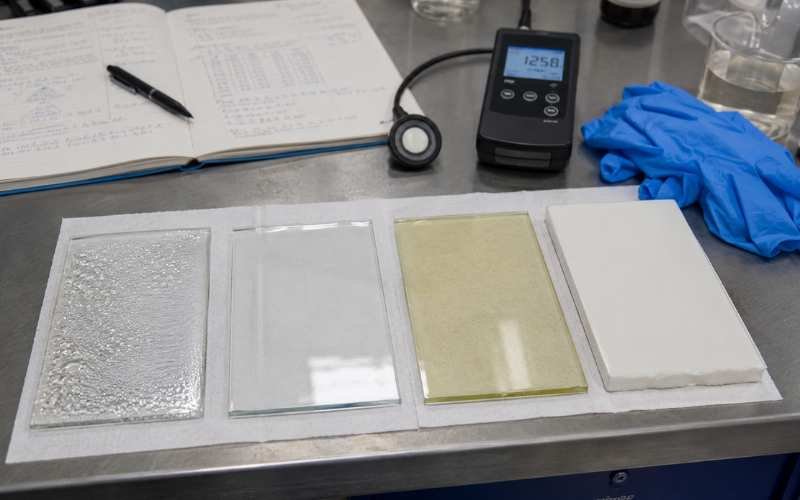
This table is useful for R&D engineers and technical buyers.
| Problem | Possible Cause | Practical Fix |
|---|---|---|
| Surface remains tacky | Oxygen inhibition, low PI level, weak lamp energy | Increase PI ladder, add suitable synergist, check lamp dose |
| Bottom remains soft | Film too thick, pigment blocks UV | Add TPO-L or 819, reduce film thickness, increase UV dose |
| Yellowing after cure | Overdose, amine issue, resin issue, heat aging | Reduce PI level, change blend, test yellowness index |
| White specks in batch | Poor dissolution of solid PI 184 | Pre-dissolve, raise mixing control, check storage stability |
| Cure speed drops in production | Lamp aging, batch variation, wrong dosage | Check UV intensity, COA, line speed, and mix process |
| Good lab cure but poor factory cure | Scale-up mixing or lamp difference | Repeat test under production lamp and line speed |
| Odor too strong | Overdose or residual monomer | Reduce PI level, improve cure, review monomer package |
| Poor adhesion | Under-cure or substrate mismatch | Adjust PI blend, surface treatment, and resin selection |
I see one mistake often: buyers add more PI 184 to solve every cure problem. That can help surface cure, but it will not always solve depth cure. Sometimes it only adds yellowing and cost.
Key Formulation Risks Buyers Should Check
Yellowing Risk
Photoinitiator 184 is known for low yellowing, but final color stability depends on the full formulation.
Yellowing can come from:
- High PI dosage
- Amine synergist
- Resin impurities
- UV overexposure
- Heat aging
- Poor additive choice
- Wrong PI blend
For export coatings and premium packaging varnishes, I suggest measured yellowness index testing, not only visual checking. For deeper troubleshooting, read UVIXE’s guide on photoinitiator yellowing issue.
Cure Depth Limitation
PI 184 is strong in clear and thin-to-medium systems. It is weaker when UV light cannot travel through the film.
Watch cure depth carefully in:
- White UV ink
- Filled adhesives
- Thick coatings
- Black ink
- Opaque resin
- Pigmented 3D printing materials
If the surface cures but the bottom stays soft, you are not looking at a simple dosage problem. You are looking at a light penetration problem.
Solubility and Pre-Dissolution
Photoinitiator 184 is solid, so dissolution control matters.
Poor dissolution can cause:
- Haze
- Specks
- Filter blocking
- Uneven cure
- Storage instability
- Batch-to-batch variation
The IGM energy curing product guide gives useful product-category context for energy curing materials. For PI 184 approval, your own solubility test is still necessary.
Before bulk use, check:
- Solubility in your monomer package
- Mixing temperature
- Dissolution time
- Clarity after 24–72 hours
- Low-temperature storage behavior
- Recrystallization risk
Incoming QC Risk
A low price is not useful if QC cannot control the batch.
| QC Item | Why It Matters | Buyer Action |
|---|---|---|
| Appearance | Catches contamination or storage issues | Check color and crystal condition |
| Assay | Confirms active content | Match COA with internal standard |
| Melting range | Helps detect quality shift | Compare each batch |
| Batch number | Supports traceability | Record in production lot file |
| SDS | Needed for safety and import | Request before shipment |
| TDS | Needed for R&D review | Keep with formulation file |
| COA | Needed for batch approval | Request for every shipment |
Sigma-Aldrich provides useful chemical reference information for 1-Hydroxycyclohexyl phenyl ketone. For bulk manufacturing, supplier traceability matters just as much as chemical identity.
Practical Cost and TCO Analysis
The cheapest Photoinitiator 184 price per kilogram can become expensive if it slows the line or increases failed batches.
| Cost Factor | Why It Matters | Buyer Decision |
|---|---|---|
| Price per kg | Easy to compare | Only first-level cost |
| Dosage level | Determines true formula cost | Compare cost per finished batch |
| Cure speed | Controls line output | Faster cure may lower total cost |
| Yellowing failure | Causes claims and rejects | Low-yellowing stability protects margin |
| Rework rate | Hidden factory cost | Poor cure costs more than better PI |
| Batch stability | Protects production planning | Check supplier consistency |
| Lead time | Affects inventory risk | Confirm before peak season |
| Documents | Affects customs and QC | Request SDS, TDS, COA |
Use this simple procurement formula:
True PI cost = price/kg × dosage + line speed impact + rejected batch risk + supply risk.
A lower PI price does not help if your coating line slows down, your white ink fails through cure, or your customer rejects yellowed varnish.
How to Source Photoinitiator 184 from China Without Batch Risk
A serious supplier should help you control both technical and export risk.
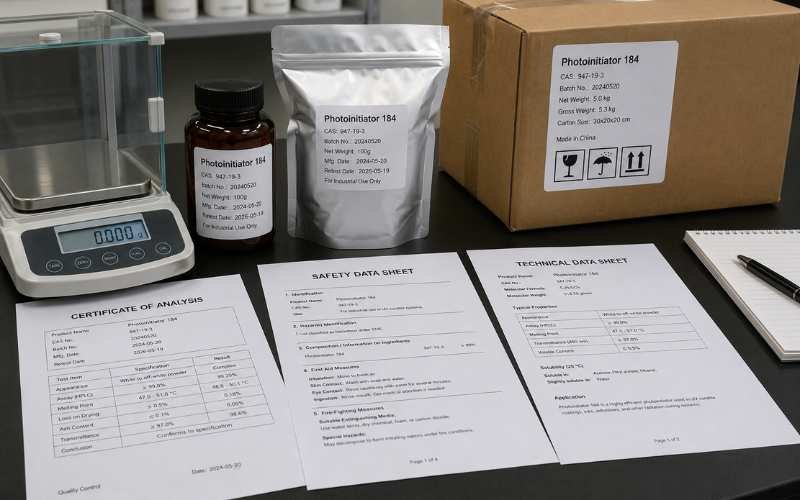
Technical Buying Checklist
| Item | What to Confirm |
|---|---|
| CAS Number | 947-19-3 |
| Chemical Name | 1-Hydroxycyclohexyl phenyl ketone |
| Appearance | White crystalline powder |
| Purity / Assay | Match your internal standard |
| Melting Range | Confirm against COA |
| SDS | Required for handling and import |
| TDS | Required for formulation review |
| COA | Required for batch approval |
| Batch Number | Needed for traceability |
| Sample | Required before bulk purchase |
Commercial Buying Checklist
| Commercial Item | Why It Matters |
|---|---|
| MOQ | Lab, pilot, and production orders differ |
| Packaging | Common export packaging must protect material |
| Lead Time | Affects production planning |
| Incoterms | Changes landed cost |
| Export Documents | Needed for customs clearance |
| Shelf Life | Supports inventory control |
| Related PI Supply | Helps simplify purchasing |
If you buy several UV initiators, one stable supplier can reduce communication cost and batch risk. UVIXE supplies PI 184 together with Photoinitiator 1173, TPO photoinitiator, Photoinitiator 819 / BAPO, TPO-L, ITX, DETX, 907, and 369.
My Field Advice: When I Recommend 184 and When I Reject It
I Recommend Photoinitiator 184 When
I usually recommend PI 184 when the buyer needs clean appearance and low yellowing in a clear or lightly pigmented UV system.
Good cases include:
- Clear UV wood coating
- Plastic clear coating
- Paper varnish
- Overprint varnish
- Clear UV adhesive
- Low-yellowing acrylic coating
- Mercury UV curing line
- Controlled dissolution process
In these systems, PI 184 gives a reliable starting point.
I Reject Photoinitiator 184 Alone When
I do not recommend PI 184 alone when the buyer needs deep cure through pigment, filler, or long-wavelength LED exposure.
Risk cases include:
- White UV ink with high TiO2
- Thick pigmented coating
- 405 nm LED-only resin
- Filled UV adhesive
- Black UV ink
- Deep-cure DLP resin
- Formula with poor solid PI solubility
In those cases, I usually test PI 184 as part of a blend, not as the only photoinitiator.
FAQ About Photoinitiator 184
Is Photoinitiator 184 the same as Irgacure 184?
Yes. Irgacure 184 is a known trade name for Photoinitiator 184. The chemical name is 1-Hydroxycyclohexyl phenyl ketone, and the CAS number is 947-19-3.
Is Photoinitiator 184 the same as Omnirad 184?
Yes. Omnirad 184 is another commercial name for the same chemical type. Buyers should still confirm CAS number, COA, assay, and supplier quality before purchase.
Is Photoinitiator 184 yellowing?
Photoinitiator 184 is widely selected for low-yellowing UV systems. Final yellowing still depends on resin, additives, dosage, UV exposure, heat aging, and film thickness.
Can Photoinitiator 184 be used with UV LED?
It depends on wavelength. PI 184 may work in some 365 nm UV LED systems, but 395 nm and 405 nm LED systems often need TPO, TPO-L, or 819 support.
What is the typical dosage of Photoinitiator 184?
Many formulators start around 1–4% for clear coatings, varnishes, and adhesives. UV inks may need 2–5% total PI blend, especially when pigment loading is high.
Is Photoinitiator 184 better than 1173?
Not always. PI 184 is solid and useful for low-yellowing surface cure. Photoinitiator 1173 is liquid and easier to mix. The better choice depends on lamp, film thickness, handling, and cure target.
Can Photoinitiator 184 cure white UV ink?
Photoinitiator 184 can support white UV ink, but it is often not enough alone. White ink usually needs TPO-L, 819, or another deeper-curing photoinitiator because titanium dioxide blocks UV light.
What documents should I request before buying Photoinitiator 184?
Request TDS, SDS, COA, batch number, packaging details, shelf-life information, and export documents. Always test a sample before approving bulk production.
Choose 184 by Formulation Logic, Not by Habit
Photoinitiator 184 is a proven Type I photoinitiator for low-yellowing UV coatings, inks, adhesives, varnishes, and selected resin systems. It performs best when the formula is clear or lightly pigmented, the lamp spectrum fits, and the production team controls dissolution.
But PI 184 is not a universal cure package. It has clear limits in white ink, thick coatings, filled adhesives, and 395/405 nm LED systems. In those cases, the better decision is often a blend with TPO, TPO-L, or 819.
The right question is not “Is Photoinitiator 184 good?”
The right question is: does Photoinitiator 184 match your lamp, film thickness, pigment load, resin system, cure speed, and yellowing target?
That is how I would select it for production.
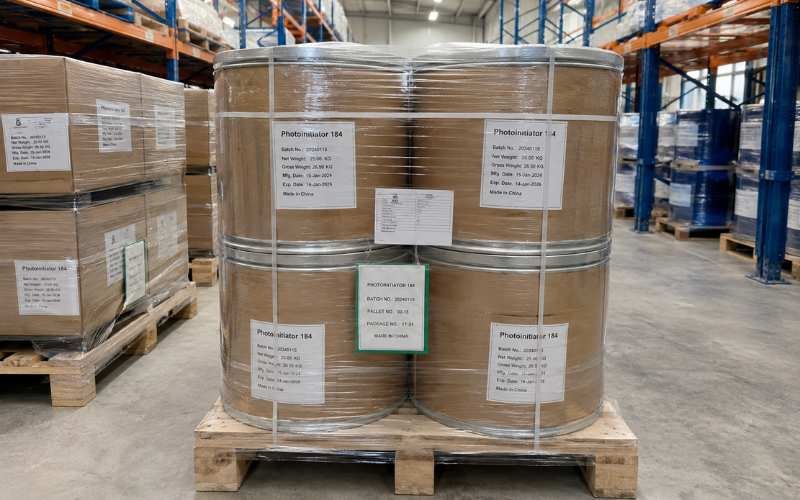
Need Stable Photoinitiator 184 for Production Testing?
UVIXE supplies Photoinitiator 184 for UV coating, UV ink, UV adhesive, UV resin, and 3D printing material manufacturers.
Send us your application, lamp wavelength, film thickness, pigment level, target dosage, destination country, and expected order volume. We can support sample testing, COA, SDS, TDS, export documents, and stable batch supply for long-term purchasing.