What is ITX Photoinitiator?

ITX photoinitiator is 2-Isopropylthioxanthone, CAS 5495-84-1. It is a Type II thioxanthone photoinitiator used mainly in UV ink, UV coating, UV adhesive and varnish systems. ITX often works with amine synergists and is commonly tested with 907 or 369 in pigmented UV curing systems. Buyers should check dosage, lamp wavelength, yellowing, odor, migration risk and … Read more
What is DETX Photoinitiator?

DETX photoinitiator is 2,4-Diethylthioxanthone, CAS 82799-44-8, a Type II thioxanthone photoinitiator used with amine synergists to improve UV and LED UV curing, especially in pigmented ink, coating, varnish, and selected adhesive systems. Best use case: DETX is most useful for pigmented UV ink and LED UV curing systems where bottom cure is weaker than surface … Read more

What is Photoinitiator TPO-L?

Photoinitiator TPO-L is a liquid Type I phosphine oxide photoinitiator used in free-radical UV curing. Its CAS number is 84434-11-7. It absorbs UV or LED light, forms free radicals, and helps acrylate coatings, inks, adhesives, varnishes, and photopolymer resins cure into a solid film. Industrial buyers choose TPO-L when they need: Liquid dosing instead of … Read more

What is Photoinitiator 369?

What Buyers Should Know About Photoinitiator 369 Photoinitiator 369 is a Type I alpha-amino ketone photoinitiator used to start free-radical UV curing in acrylate-based inks, coatings, adhesives, solder masks, photoresists, and printing plates. It is mainly selected for pigmented UV systems where deeper cure is harder to achieve. Key facts: CAS No.: 119313-12-1 Common names: … Read more

What is Photoinitiator 907?

Photoinitiator 907 is a Type I free-radical UV photoinitiator used to cure acrylate-based UV inks, coatings, adhesives, PCB inks, and photoresist-related systems. Its CAS number is 71868-10-5, and its chemical name is 2-Methyl-4′-(methylthio)-2-morpholinopropiophenone. For industrial buyers, Photoinitiator 907 is mainly selected when a UV formulation needs better curing in pigmented systems, especially dark UV ink, … Read more

What is Photoinitiator 184?

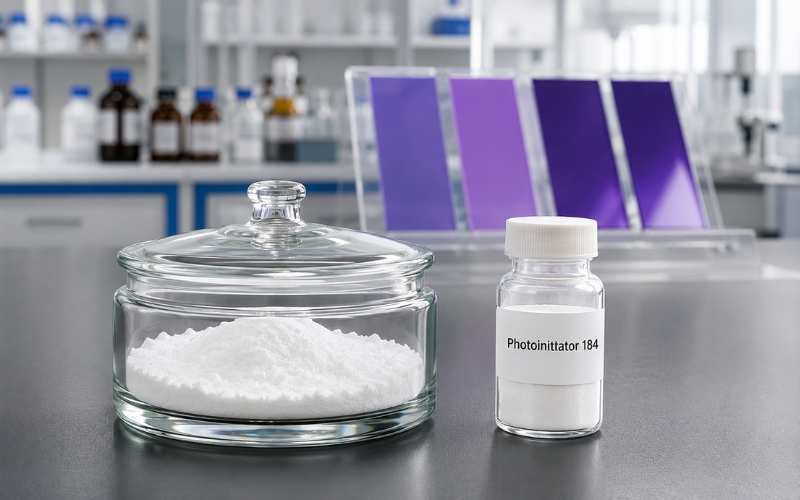
Photoinitiator 184 is 1-Hydroxycyclohexyl phenyl ketone, CAS 947-19-3. It is a solid Type I alpha-hydroxy ketone photoinitiator used to start free-radical UV curing in acrylate coatings, inks, adhesives, varnishes, and selected UV resin systems. Best for: Not ideal alone for: Typical starting dosage: Application Practical Starting Range Clear UV coating 1–3% UV varnish 2–4% UV … Read more

What Is TPO Photoinitiator?

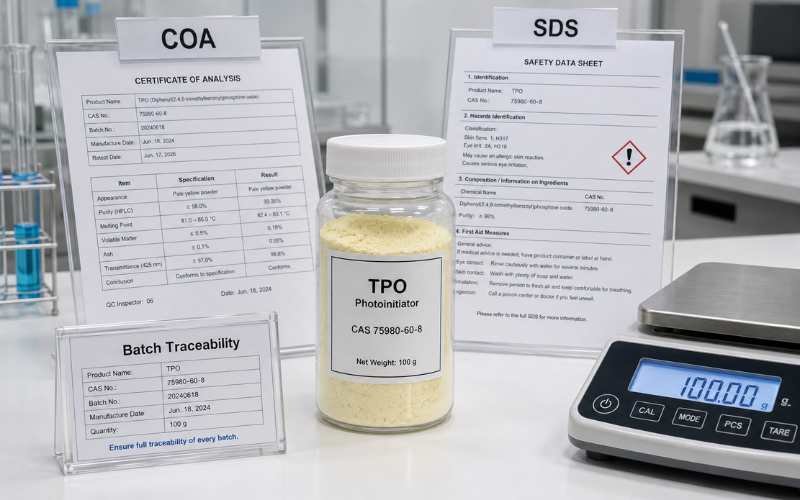
TPO photoinitiator is a Type I acylphosphine oxide photoinitiator used to start free radical UV curing in acrylate coatings, inks, adhesives, and 3D printing resins. Its chemical name is diphenyl(2,4,6-trimethylbenzoyl)phosphine oxide, and its CAS number is 75980-60-8. For industrial buyers, TPO is usually selected when a UV system needs: TPO is not the best answer … Read more

What Is BAPO Photoinitiator 819?

BAPO Photoinitiator 819 is a Type I free-radical photoinitiator used for deep curing in UV coatings, UV inks, UV adhesives, and SLA/DLP 3D printing resins. Its chemical name is phenylbis(2,4,6-trimethylbenzoyl)phosphine oxide, and its CAS number is 162881-26-7, listed by ECHA for chemical identity and PubChem compound data. Use BAPO 819 when your formulation needs through … Read more

Photoinitiator Yellowing Issue: Causes & Fixes

What Causes The Photoinitiator Yellowing Issue? The photoinitiator yellowing issue happens when a UV formulation turns yellow, cream, amber, or warm-toned after curing, heat aging, sunlight exposure, or storage. In my UVIXE work with UV coating, UV ink, UV adhesive, and SLA/DLP resin buyers, I rarely see yellowing caused by one raw material alone. It … Read more

What Affects UV Curing Speed?

UV curing speed depends on three groups of variables: Light source variables: UV intensity, wavelength, UV dose, lamp distance, reflector condition, lamp age, and conveyor speed. Formulation variables: photoinitiator type, photoinitiator dosage, resin reactivity, pigment load, additives, and oxygen inhibition. Application variables: film thickness, substrate transmission, coating weight, ink color, adhesive gap, temperature, and production … Read more

What is Photoinitiator 1173?

Photoinitiator 1173 is a liquid Type I α-hydroxy ketone photoinitiator used in free-radical UV curing. Its chemical name is 2-Hydroxy-2-methylpropiophenone, and its CAS number is 7473-98-5. It absorbs UV light, forms free radicals, and starts curing in acrylate-based UV coatings, UV inks, UV adhesives, varnishes, and selected UV resin systems. Public chemical references such as … Read more

What Does a Photoinitiator Do? UV Curing Guide

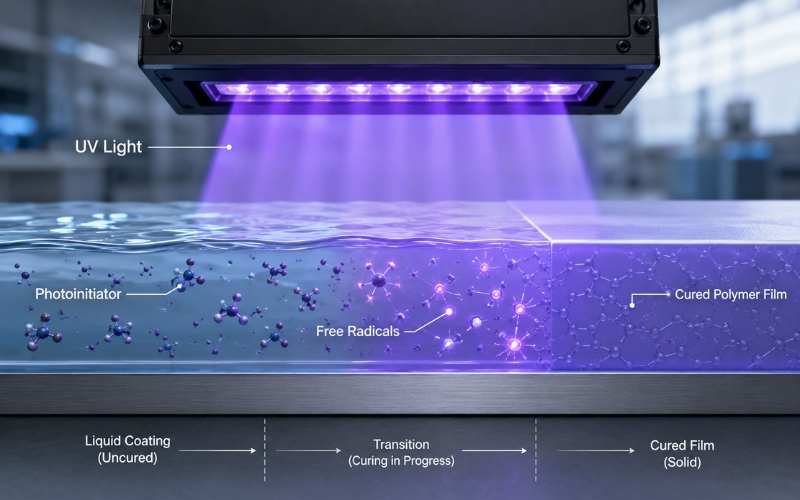
What Does a Photoinitiator Do? A photoinitiator does three jobs in UV curing: In production, a photoinitiator affects cure speed, tack-free surface, through-cure, yellowing, odor, adhesion, migration risk, and energy cost. The wrong photoinitiator can make a UV coating stay sticky, a white UV ink under-cure, an adhesive fail in the bondline, or a 405 … Read more